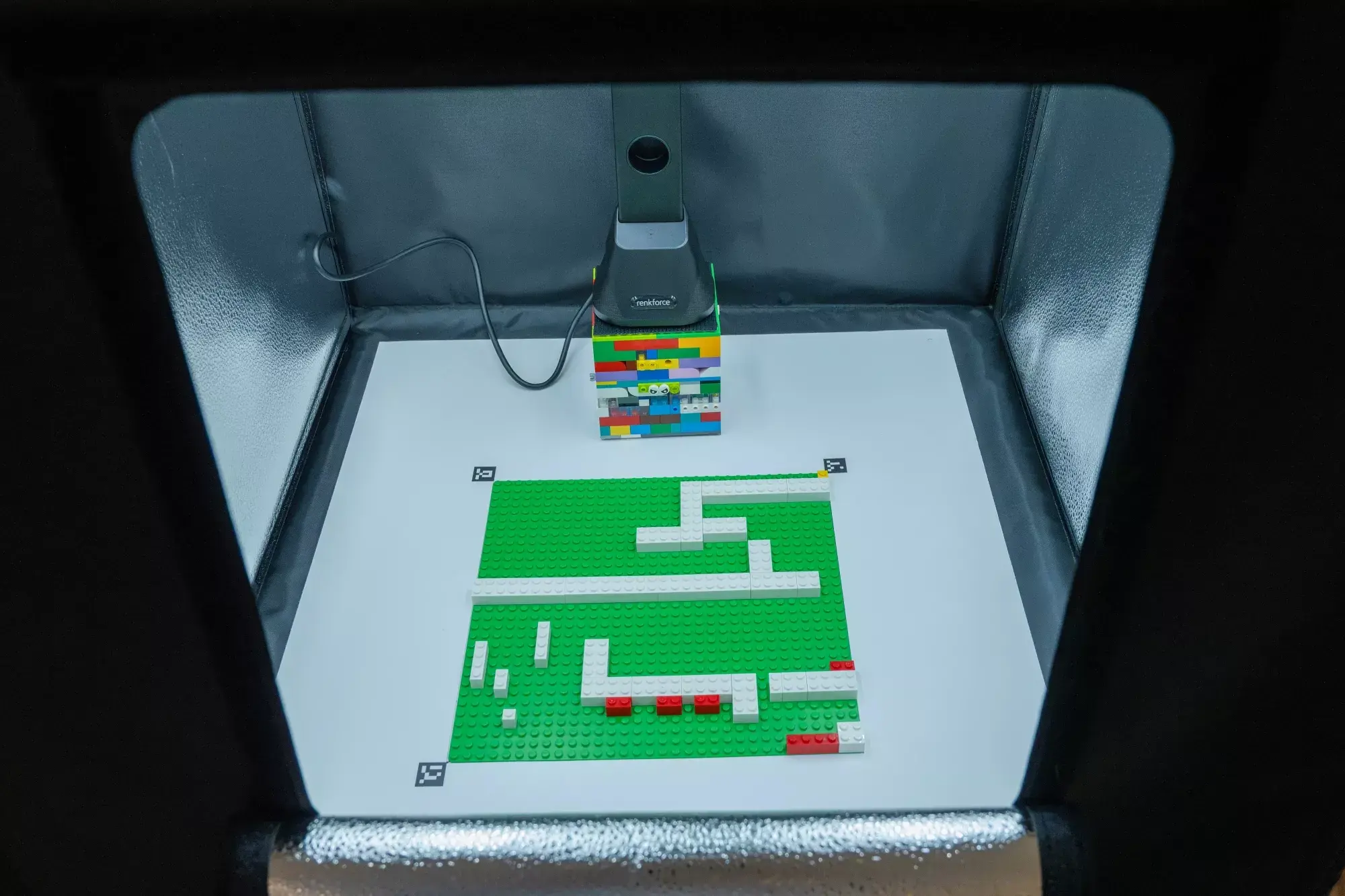
Connexion Ressources - Lego Platformer
Context
Connexion Ressources supports young people in reintegration through the Mesure 360° program. To strengthen their engagement, the organization wanted a playful activity accessible without specific technical skills. The challenge: create a tangible and stimulating experience that values young people's creativity while being supported by educators. The idea? Create and transform Lego constructions into instantly playable video game levels. A concept where the magic of transitioning from physical to digital becomes a motivational lever for youth often disconnected from traditional approaches.
Expertises
Needs definitionGamificationDesignConception
Objectives
Fostering engagement through play
Our objective was to design an experience where young people become active participants, promoting their engagement and social reintegration.
Analyzing the needs of young audiences
Our brief analysis revealed a central challenge: the target audience has highly diverse levels of technical skills and motivation. We needed to create an activity where everyone can contribute, regardless of their comfort with digital tools. Lego bricks provided the answer: manipulating tangible objects allows creation without any programming or game design knowledge.
Creating the "wow effect" through instant digitization
Beyond a simple creative workshop, we wanted to produce a moment of revelation: seeing their Lego construction come to life as a playable level in seconds. This almost magical transformation strengthens participants' curiosity and sense of ownership over the project.
Facilitating deployment for educators
Not all supervisors are technology experts. Our mission therefore included designing a simple-to-implement system: scanner, intuitive web application, and clear workflow. Educators needed to run the activity autonomously while maintaining a collaborative and flexible dimension.
Building an evolving platform
Finally, the project had to go beyond a one-time activity. We envisioned a scalable architecture where new features (additional blocks, extra worlds) could enrich the experience over time, with active youth participation in suggesting improvements.

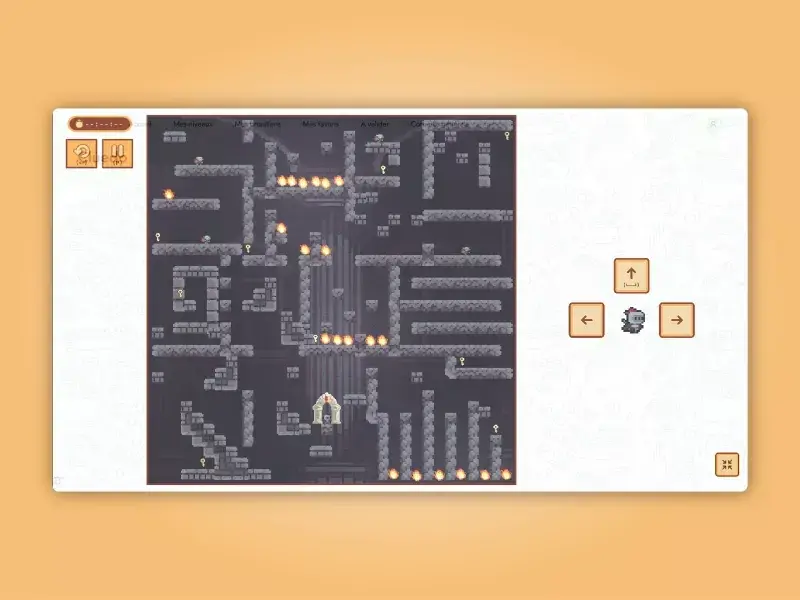
Our approach
Here, we believe in the power of play to transform engagement! Our approach to this project rests on three pillars:
1. Physical-digital hybridization
We designed a system where each colored brick on a 32×32 Lego plate corresponds to a gameplay element. Through a scanning device, the physical construction transforms into a digital game level.
2. User-centered design
No complex tutorials or intimidating interfaces. We designed each step so that young people and educators could naturally adopt the tool.
3. Scalability at the core of the system
We architected a modular platform where adding new blocks, worlds, or features becomes simple. Young people don't just consume the game: they co-create it and help it grow with their ideas.

Results
Young people create their levels with Lego bricks, experience the "wow effect" of instant digitization, and share their creations. Educators deploy the activity independently. A motivating, engaging, and evolving project that continues to grow with participants' ideas!

Team's project